






Dandruff Is Not Dry Scalp - And Why Applying Oil Makes It Worse
In India, almost everyone has grown up hearing one universal piece of advice:
“Dandruff ho raha hai? Oil lagao. Your scalp is dry.”
But this is scientifically incorrect. Dandruff is not caused by dryness — and applying oil is one of the fastest ways to make it worse
To manage dandruff correctly, it's important to understand what it actually is and why traditional remedies often backfire.
Dandruff vs Dry Scalp: Two Completely Different Problems
1. Dandruff Is Caused by a Fungus, Not Dryness
A fungus called Malassezia naturally lives on everyone’s scalp.
It feeds on sebum - natural oil produced by our body including our scalp. Fungus after feeding on sebum releases irritation-causing byproducts.
This irritation triggers inflammation, itching and flakes.
This means dandruff is:
-
fungal
-
oily
-
itchy
-
inflamed
It is not a sign of dryness — it is a sign of an irritated, unbalanced scalp which contains fungal overgrowth.
2. Dry Scalp Has Small, Powdery Flakes (Not Thick, Oily Ones)
Dry scalp is often caused by environmental dryness or harsh cleansing.
Its flakes are:
-
tiny and white
-
lightweight
-
not greasy
-
rarely itchy
Dandruff flakes, on the other hand, are:
-
thick
-
yellowish white or oily
-
stuck to the scalp
-
accompanied by itching or redness
Confusing both conditions leads to incorrect treatment especially the habit of oiling.
Why Oiling Makes Dandruff Worse
1. Oil Feeds the Fungus Responsible for Dandruff
Since Malassezia feeds on oil, applying oil directly increases its food supply.
The more oil available, the faster the fungus multiplies.
2. Oil Traps Heat and Moisture, Creating a Fungal-Friendly Environment
A warm, oily scalp becomes the perfect breeding ground for dandruff-causing microbes.
This intensifies itching, redness and flaking.
3. Oil Can Clog Hair Follicles and Aggravate Inflammation
Heavy oils can block follicles, leading to:
-
more itching
-
scalp sensitivity
-
inflammatory bumps
-
increased flake formation
This is why many people feel extremely itchy soon after applying oil during a dandruff episode.
The Right Way to Treat Dandruff
1. Focus on Gentle Exfoliation
Dandruff flakes are thick and tightly attached.
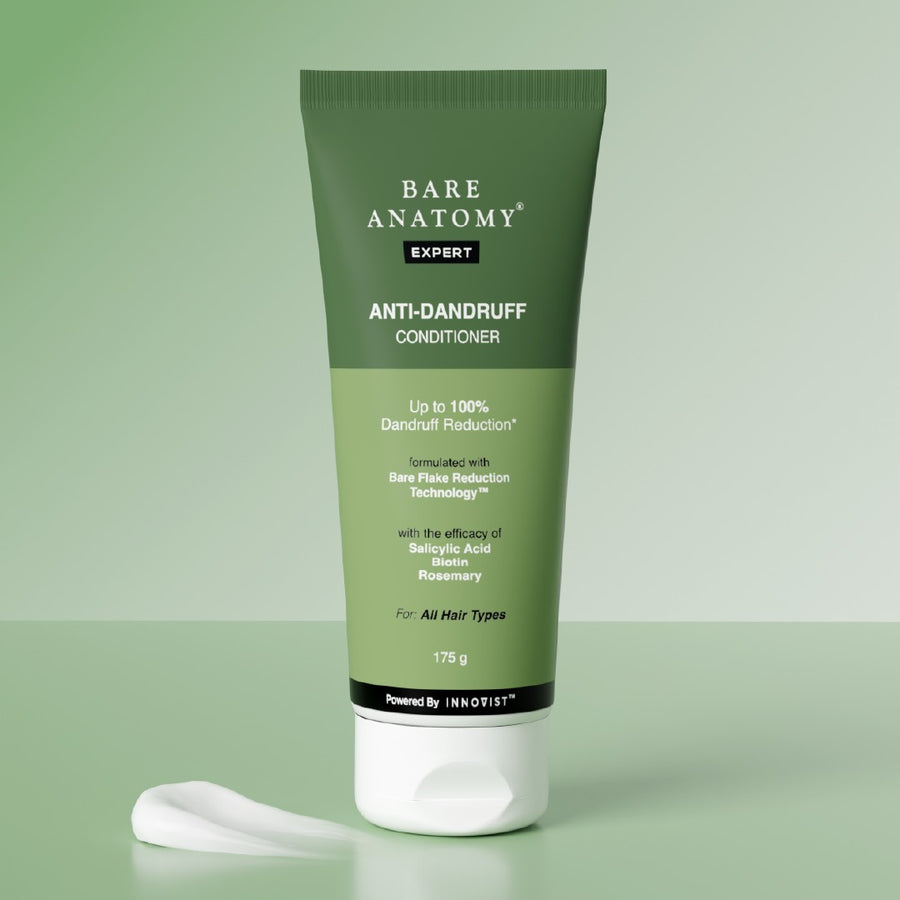
Ingredients like salicylic acid help loosen the build-up without damaging the scalp.
2. Use Ingredients That Control Fungal Growth
Piroctone Olamine present in the Bare Anatomy Anti Dandruff Shampoo helps restore microbiome balance and reduce irritation by reducing fungal growth.
 3. Keep the Scalp Clean and Wash Regularly
Many people avoid washing frequently, thinking it may worsen dryness but dandruff needs regular cleansing to remove excess oil and dead skin.
4. Avoid Heavy Oiling Until the Flakes Are Under Control
Once the scalp calms down, light oils or hydrating serums can be reintroduced but not during flare-ups.
Conclusion
Dandruff is not caused by dryness.
It is a microbiological reaction driven by fungus, sebum imbalance and inflammation.
Understanding this difference is the key to treating dandruff correctly and avoiding habits like oiling that make it worse.
If you correct the root cause instead of treating it like dryness, dandruff becomes much easier to control.
Shop the story




Fenugreek Seeds for Hair Growth & Hair Fall: Benefits, How to Use & Results
Did you know Fenugreek seeds play a vital role in regrowing your hair while preventing hair fall? If not, then you are probably not the only one who was unaware of this fact. Made with the goodness of fenugreek extract, this formula helps strengthen weak roots and prevent unwanted hair...


UV Index Explained: How to Measure Your Daily Sun Risk & Protect Your Skin
When we step out in the sun, most of us only think about temperature or brightness. But the real factor that determines how harmful the sun can be for your skin is the UV Index. Understanding the UV Index helps you know how strong the sun’s ultraviolet radiation is on...


Regrow Your Hair: Top 10 Tips to Regrow Your Hair Naturally
Hair fall, thinning, and slow growth are some of the most searched hair concerns in India. If you’ve been typing “how to regrow hair naturally” or “best way to grow hair faster” into Google lately, you’re not alone. The good news? In many cases, hair regrowth is possible with the...

Guide to the Best Sunscreen for Kids in India
For parents, protecting their child’s delicate skin is a daily concern, and sun safety is at the heart of it. Whether at the playground, swimming pool, or simply walking to school, a child’s exposure to UV rays can lead to sunburn, rashes, and long-term skin problems. You might wonder: What’s...

How to Fix an Oily Scalp Without Drying Out Your Hair?
The main reason for an oily scalp is the excessive production of sebum, a natural oil released by your sebaceous glands on your scalp. This oil is essential for protecting the scalp and keeping hair hydrated. Although sebum is necessary for a healthy scalp, excess levels mixed with sweat can...


