






Oily Scalp and Greasy Hair: Causes & Control Tips
Are you tired of dealing with an oily scalp and greasy hair? Or do you find yourself constantly washing your hair every other day? If yes, then you are not alone. Millions of people struggle with oily and greasy hair, which can be uncomfortable and affect their self-confidence. Understanding the causes and following the right hair care routine can help control an oily scalp and greasy hair while keeping your hair healthy.
This guide explains the causes of an oily scalp and greasy hair and shares effective tips to help manage them.
Causes of Oily Scalp
Before discussing the treatment, it is important to understand what are the major causes of oily scalp and hair. Here are some of the most common causes:
1. Over-washing or under-washing
Both excessive and inadequate washing can be the reason for oily and greasy hair. Washing your hair too frequently can strip away its natural oils, whereas Infrequent washing can also contribute to oil buildup. Especially when hair is not cleaned regularly, oil accumulates on the scalp and hair strands, causing greasiness around the scalp.
2. Hormonal changes
Hormonal fluctuations, particularly an overproduction of androgen hormones, can lead to oily and greasy hair and scalp. This increased sebum production can make the scalp and hair appear greasy soon after washing.
3. Genetics
Genetics can play a significant role in determining how much sebum your scalp produces. It is common for individuals to inherit genetic traits that make their scalp more prone to producing excessive sebum.
How to Control Oily Scalp?
Now that you are familiar with the causes, it is important to know the right way to manage oil and greasiness from your scalp and hair.
1. Use a clarifying & gentle shampoo
Using an oil control shampoo that is specially formulated to control excess oil can be highly beneficial for your hair. These shampoos are made to effectively remove oil and clear scalp buildup while reducing scalp irritation.
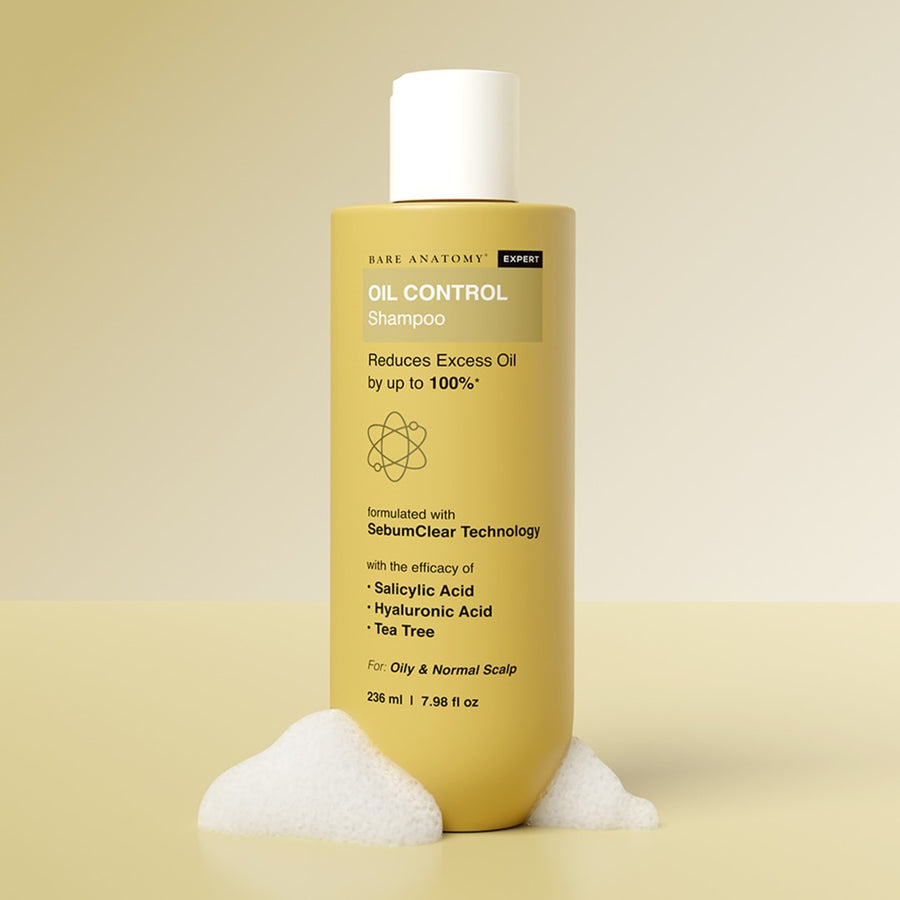
While selecting an oil control shampoo, it is important to choose the product labelled as sulphate-free; instead, you can go with a gentle yet effective shampoo, such as the Bare Anatomy Oil Control Shampoo with Salicylic acid and Hyaluronic acid
2. Avoid over-conditioning
When dealing with an especially oily scalp with greasy hair, it is essential to be mindful while picking up the conditioner. Instead of applying all over your hair, focus on the mid-lengths and ends while avoiding the scalp area where natural oil accumulates. Also, look for lightweight conditioners that are specifically formulated for oily hair.
3. Home remedies
Some home remedies may help absorb excess oil temporarily and soothe the scalp. Ingredients like aloe vera gel, diluted apple cider vinegar, or green tea rinse are commonly used to reduce scalp buildup and refresh oily hair. However, these remedies offer limited scientific evidence and should not replace a consistent hair care routine with products formulated for oily scalps.
Hair Care Tips for Oily Scalp & Greasy Hair
Managing an oily scalp and greasy hair can be challenging, but a proper hair care routine can help control excess oil and maintain a healthy scalp.
Here are detailed hair care tips to help you combat greasiness and keep your hair fresh and clean.
1. Choose the right shampoo
Select a shampoo that is specifically formulated for oily hair. Look for ingredients like salicylic acid, hyaluronic acid, tea tree, and pentavitin. These ingredients are known to control oil and have purifying properties.
Tip: Avoid shampoos that contain heavy silicones or oils, as they can weigh down your hair and make your hair appear greasier
2. Wash your hair regularly but not excessively
For oily and greasy hair, washing hair every other day is effective, but washing too frequently can strip natural oil from the scalp, causing it to produce even more oil.
3. Proper hair washing techniques
When cleaning your hair, gently massage your scalp with your fingertips to loosen dirt, excess oil, and product buildup. Vigorous scrubbing can irritate your scalp while increasing oil production.
After massaging your scalp, it is important to ensure all your shampoo is rinsed out properly, as residue can attract dirt and can make your hair look greasy faster.
4. Avoid heavy styling products
Styling gels, creams, and sprays can weigh down your hair, making your hair appear greasy more quickly.
Tips: You can use a dry shampoo between washes to absorb excess oil and refresh your hair without styling
5. Maintain a healthy diet
Eat a diet rich in fruits, vegetables, whole grains, and lean proteins. Avoid greasy, sugary, and processed foods that can increase oil production.
Drink plenty of water and practice stress-reducing activities such as yoga or meditation, as stress can trigger excess oil production.
Frequently Ask Questions


Most Read Blogs

Retinol 101: Benefits, How to Start & What to Expect
Retinol is a vitamin A derivative widely used in skincare to improve skin texture, manage acne, reduce the appearance of fine lines, and address uneven skin tone. It supports skin cell turnover...


Can You Use Salicylic Acid Every Day? Safe Frequency, Skin Types
Salicylic acid is a beta-hydroxy acid (BHA) commonly used in skincare to exfoliate dead skin cells, unclog pores, and help manage mild acne. It is especially helpful for people dealing with oily...

Salicylic Acid for Body Acne & Keratosis Pilaris: Does It Really Work?
Body acne and keratosis pilaris (KP) can both make your skin look bumpy, but they are different skin concerns. Body acne often appears as pimples, blackheads, or clogged pores on the back,...

Salicylic Acid for Dandruff & Scalp Buildup: How It Works & Best Ways to Use It
Dandruff, visible flakes, and scalp buildup can make your hair feel itchy and uncomfortable, and difficult to manage. Excess oil, dead skin, and leftover hair product can build up on the scalp,...

Salicylic Acid Face Wash vs Serum: Key Differences & Which One Your Skin Needs
Salicylic acid is a popular skincare ingredient for managing excess oil, clogged pores, blackheads, and acne. It is available in different formulations, including face washes and serums. While both can help with...

How Salicylic Acid Treats Acne & Breakouts: Benefits, Strength & Best Routine
Acne often develops when excess oil, dead skin cells, and other impurities build up in the pores. This buildup can lead to blackheads, whiteheads, and inflamed pimples. If your skin often feels...


