






Guide to the Best Sunscreen for Kids in India
For parents, protecting their child’s delicate skin is a daily concern, and sun safety is at the heart of it. Whether at the playground, swimming pool, or simply walking to school, a child’s exposure to UV rays can lead to sunburn, rashes, and long-term skin problems. You might wonder: What’s the best sunscreen for kids? Is there a difference between kids sunscreen, sunscreen for babies, and options marketed for teens?
This comprehensive guide is designed to answer your most pressing questions and help you choose a sunscreen your little ones will love.
Is Sunscreen Important for Kids?
 Absolutely. Children’s skin is thinner and more sensitive than adults’, making them especially vulnerable to sunburn and lasting sun damage. Even brief outdoor play exposes them to UV radiation, which accumulates over time. Consistently using sunscreen for children is vital in India’s climate, where UV levels are high for most of the year.
By building sun protection into your child’s daily routine, you’re not just avoiding sunburn now—you’re also helping prevent skin cancer and premature ageing later in life.
What Should You Look for in Sunscreen for Kids?
 Choosing a kids sunscreen isn’t about flashy packaging—it’s about safety, comfort, and easy application. Look for a broad-spectrum sunscreen with SPF 30 or higher, which protects against both UVA and UVB rays. For children with sensitive skin, a mineral-based sunscreen for kids (using zinc oxide or titanium dioxide) is ideal. These formulas sit on the skin's surface, blocking harmful rays without soaking in or causing reactions.
In India’s heat and humidity, waterproof sunscreen for swimming for kids is a smart pick for active days by the pool or playground. Hypoallergenic, fragrance-free options minimize the risk of irritation—a must for infants and toddlers. If your child dislikes thick creams, consider a lightweight lotion or stick made specifically as a sunscreen for kids' faces: these blend seamlessly and don’t sting the eyes. When in doubt, check for dermatologically tested badges or paediatrician recommendations.
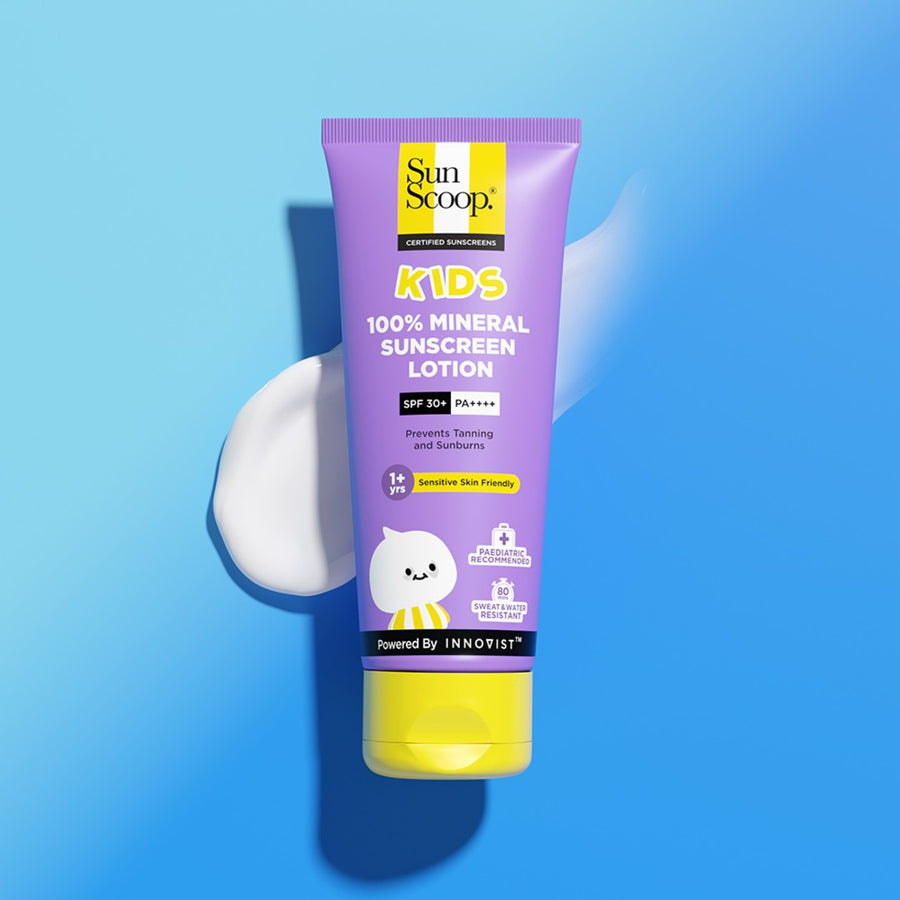
Best Sunscreen for Kids in India: SunScoop Kids Sunscreen
 Navigating India’s sunscreen market can feel overwhelming, but standout
products like Sunscoop 100% Mineral Kids Sunscreen make sun safety simple. Specially formulated for young, sensitive skin, SunScoop is packed with mineral filters such as zinc oxide, ensuring gentle yet effective SPF 50 protection. Its creamy lotion is easy to spread, non-sticky, and safe for the face and body—even for babies over six months old.
SunScoop is water-resistant for up to 80 minutes, making it an ideal swimming sunscreen for kids and perfect for school trips, sports, or weekend adventures. The formula is free from harsh chemicals, parabens, and artificial fragrance, so you can use it daily without worry.
For older kids and tweens, SunScoop’s lightweight texture offers invisible, non-comedogenic protection, ranking it among the best sunscreens for teenagers and the best sunscreen for 12-year-olds in India.
Why Are Mineral Sunscreens Best for Kids?
 Most pediatric dermatologists recommend mineral-based sunscreen for kids, and for good reason. Unlike chemical sunscreens, which absorb and neutralize UV rays, mineral sunscreens stay on the skin’s surface and reflect sunlight away immediately. They’re less likely to cause allergic reactions or irritate sensitive areas, such as around the eyes. For babies and toddlers, this means fewer tears and less fuss during application.
Mineral sunscreens also have the added benefit of being effective from the moment they’re applied (no need to wait 20 minutes before sun exposure), and they typically do not clog pores. For peace of mind and all-around protection, a mineral formula is the safest choice for your child’s sunny days.
How to Apply Sunscreen on Kids?
 Applying sunscreen to kids can be a challenge, but a few simple habits make the process smoother. Start by applying sunscreen generously on all exposed skin at least 15 minutes before heading outdoors. Don’t forget areas like the tips of ears, back of the neck, tops of feet, and even the scalp if hair is thin. For faces, use a gentle formula labelled sunscreen for kids' faces to avoid stinging.
Encourage participation: let your child help dab sunscreen onto their cheeks or arms—it builds good habits and a sense of independence. If your child swims, sweats, or towels off, reapply every two hours (even if the product claims to be a waterproof sunscreen for swimming for kids). And remember: even on cloudy or winter days, sun protection remains essential.
To Conclude
Sun safety for children requires more than a one-time smear. It’s about finding the best sunscreen for kids and making it part of your family’s daily routine. Opt for a mineral, water-resistant SPF for everyday adventures, and don’t forget to reapply after outdoor play or swimming. Ready to protect your little one’s glow? Shop the best kids and baby sunscreens today

Shop the story

Fenugreek Seeds for Hair Growth & Hair Fall: Benefits, How to Use & Results
Did you know Fenugreek seeds play a vital role in regrowing your hair while preventing hair fall? If not, then you are probably not the only one who was unaware of this fact. Made with the goodness of fenugreek extract, this formula helps strengthen weak roots and prevent unwanted hair...


UV Index Explained: How to Measure Your Daily Sun Risk & Protect Your Skin
When we step out in the sun, most of us only think about temperature or brightness. But the real factor that determines how harmful the sun can be for your skin is the UV Index. Understanding the UV Index helps you know how strong the sun’s ultraviolet radiation is on...


Regrow Your Hair: Top 10 Tips to Regrow Your Hair Naturally
Hair fall, thinning, and slow growth are some of the most searched hair concerns in India. If you’ve been typing “how to regrow hair naturally” or “best way to grow hair faster” into Google lately, you’re not alone. The good news? In many cases, hair regrowth is possible with the...

Guide to the Best Sunscreen for Kids in India
For parents, protecting their child’s delicate skin is a daily concern, and sun safety is at the heart of it. Whether at the playground, swimming pool, or simply walking to school, a child’s exposure to UV rays can lead to sunburn, rashes, and long-term skin problems. You might wonder: What’s...

How to Fix an Oily Scalp Without Drying Out Your Hair?
The main reason for an oily scalp is the excessive production of sebum, a natural oil released by your sebaceous glands on your scalp. This oil is essential for protecting the scalp and keeping hair hydrated. Although sebum is necessary for a healthy scalp, excess levels mixed with sweat can...


