






Your Skin Care Routine for Acne-Prone Skin: Everything You Asked About Acne Treatments
Oily skin types have acne-prone skin because it secretes excess oil, which stays on the epidermis and clogs pores. It makes the skin hard to breathe, leaving dead skin accumulations on the epidermis. Without a dedicated skincare routine, you can't counter oily skin issues causing acne to turn worse and stubborn to treat.
Skin care routine For Acne Prone Skin: Overview
Every skin type is prone to acne and pimples without a daily skin care routine. For oily skin types, it's far worse and may require clinical help from a board-certified dermatologist. Why do individuals with oily skin need to follow a daily skin care routine?
Our skin contains sebaceous glands. They secrete a watery colourless fluid called sebum to keep the outer skin smooth and irritation-free. Those with oily skin may secrete excess skin oil. It leads to a sticky epidermis (clog pores) and attracts external pollutants, leading to acne-prone skin tone. If you don't use a suitable cleanser daily, your skin will turn uneven from painful pimple eruptions.
Skincare routine benefits, and why do you need it?

Skin is the largest human organ based on the surface area. It secretes sebum and oil as a natural cleansing mechanism to keep the epidermis mature and resistant to natural stressors. What if it leads to clogged pores?
When sebaceous glands get triggered, they secret excess oil more than required. A skincare routine cleans your skin using suitable dermal products to calm irritated skin and prevent further worsening of symptoms. Besides, it depends on your skin type, and basic measures like washing your face with a suitable cleanser stay the same even for combination skin, dry skin and sensitive skin.
Skin care Routine Acne and How to Manage it?

You may not have an oily texture and still have acne-prone skin. This section will describe how to manage your epidermis to reduce pimples, vital to counter facial spots and the worsening of exposed pores.
-
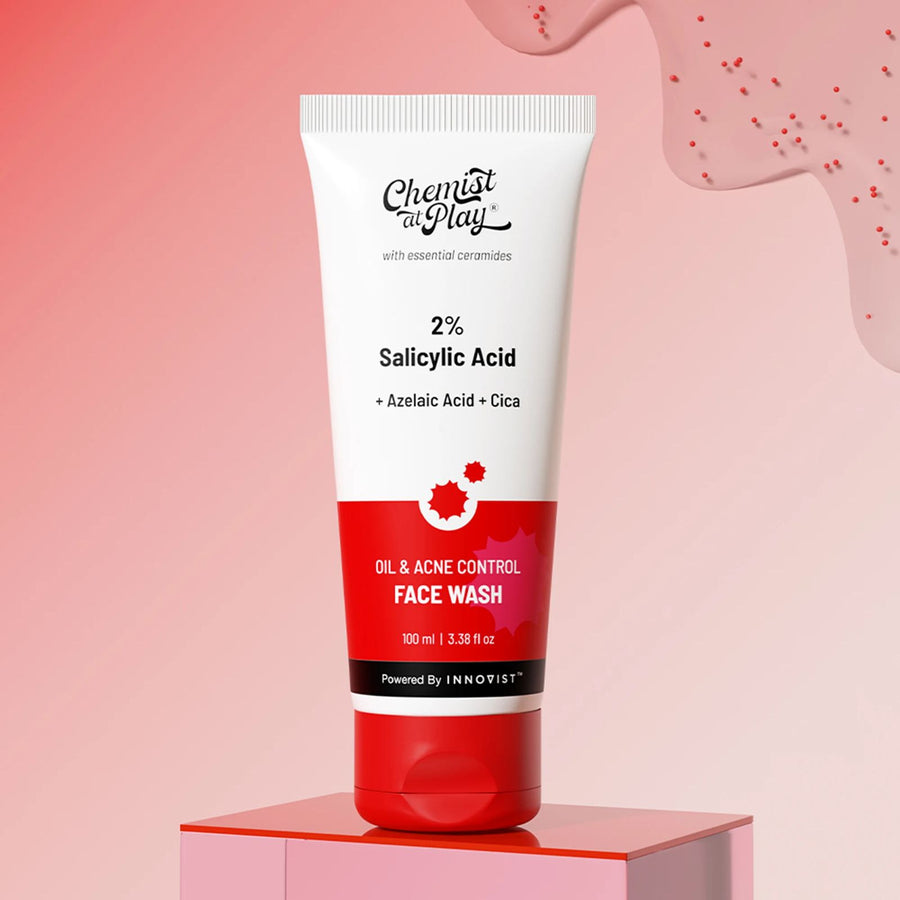
Choose a suitable cleanser such as Chemist At Play Salicylic Acid Face Wash (a face wash imparting skin peeling would do. For countering stubborn pimples, you may need a toner).
-
Find dermal products that reduce inflammation (to counter acne vulgaris)
-
Buy products with ingredients like benzoyl peroxide and salicylic acid (these kill pathogens that make pimples worse).
-
Prepare homemade anti-acne products like facemasks which impart deep cleansing, clearing all the clogged pores on your face (clay mask, rosewater toner).
-
Wash your face 3-4 times/day to rinse excess sebum build-up and eliminate dead skin from blocking your pores.
-
Follow preventive skincare tips to prevent the triggering of pimples (staying away from direct heat, reducing intense sun exposure and taking a daily bath reduces acne symptoms).
Acne treatment and how many types of acne?
Not every skin eruption is acne, and not all pimple causes inflammation. Dermatologists classify acne into 7-categories spread from tiny micro-comedones to large and inflammatory nodules. While the former is harmless, the latter requires clinical treatment. Here are 7-stages of an acne eruption:
Non-erupting stages
-
Micro-comedones (tiny skin bumps that are hard to spot unless you secrete excess oil)
-
Whiteheads (these skin bumps clog pores and appear like white coloured heads on the epidermis)
Erupting stages
-
Blackheads (after the whiteheads open, the clogged collection of dead cells, oil and sebum comes out on the epidermis)
-
Papules (these represent inflamed micro-comedones and are distinctly identified from their reddish hue)
-
Pustules (these are worsened whiteheads, especially because of acne vulgaris)
-
Cystic acne (when an entire epidermal pore gets affected, it turns into a deep cyst with a tingling pain sensation)
Natural ingredients and DIY acne treatments

Preventive measures to counter acne breakouts
Pimples are preventable in most cases, and the most basic measure begins with preventive lifestyle management. Harmless pimples turn into inflammatory acne when you ignore the triggers that make it worse. To prevent pimples, incorporate this into your daily lifestyle:
-
For healthy skin, keep your skin oil-free
-
Remove excess oil from your skin by using dermal products having astringent properties.
-
Soothe your oil glands by abstaining from consumption that clogs your hair follicles
-
Stay away from spurious substances (alcohol/tobacco/caffeine) if you want healthy skin
-
Follow your skincare routine to clean dead skin cells daily.
-
Correct your sleeping posture (never sleep on your face if you don't want to wake up with excess oil)
-
Use cold water for bathing and cleansing your face daily to drain oil eruptions from your skin.
Acne medications and other clinical methods
Acne medications reduce skin inflammation, blocking excess sebum and eliminating microbial activities on your face. When DIY methods cannot contain your worsening pimples, consult with a board-certified dermatologist to learn more about acne treatment medication. Formulations include many acne treatment medications:
-
Benzoyl peroxide
-
Glycolic acid
-
Hyaluronic acid
-
Salicylic acid
-
Retinoids
-
Niacinamide
-
Antibiotics that kill pimple-causing bacteria, fungus and pathogens (anti-acne medication)
These are also available in hydrating toner. In pimple treatment, you need topical lotions, oral medications, and even dermal injections, depending on their severity. What do they do?
-
Reduce inflammation (blocking further pimple development)
-
Reducing oil production to prevent its flooding on the epidermis
-
Fading skin spots and acne marks by removing dead skin cells and regeneration of underlying cells
-
Repair underlying skin pores to stabilise oil production
Products For Daily Skin Care Routine for Acne-Prone

If you have painful acne issues, any dermatology association would recommend alcohol-free products to prevent dermal inflammation. Follow this checklist to plan your beauty routine:
-
Use an oil-free moisturiser to prevent acne eruptions.
-
For clearer skin, use gentle cleansers (no non-medicated cleanser)
-
Medical associations recommend not to wear makeup and always using personal makeup brushes
-
Apply facial sunscreens (sun exposure worsens pimples)
-
Birth control pills are a must not unless prescribed by your gynaecologist.
-
To remove dead skin cells, use cleansers having astringent properties.
Acne treatment: Permanent solution?

Peer-reviewed studies suggest a permanent solution to pimples is possible with clinical care and following your daily skincare routine. Spot treatment and peeling skin are manageable with topical medications and DIY methods. These keep your skin clear and fade existing blemishes irrespective of your skin type.
Spot treatments for a chronic skin condition may require laser therapy to control pimple eruptions supported through powerful anti-inflammatory medications. Following a lifestyle that reduces the chances of pimple triggers, you calm the oil glands from a spontaneous breakout.
Shop the story


Fenugreek Seeds for Hair Growth & Hair Fall: Benefits, How to Use & Results
Did you know Fenugreek seeds play a vital role in regrowing your hair while preventing hair fall? If not, then you are probably not the only one who was unaware of this fact. Made with the goodness of fenugreek extract, this formula helps strengthen weak roots and prevent unwanted hair...


UV Index Explained: How to Measure Your Daily Sun Risk & Protect Your Skin
When we step out in the sun, most of us only think about temperature or brightness. But the real factor that determines how harmful the sun can be for your skin is the UV Index. Understanding the UV Index helps you know how strong the sun’s ultraviolet radiation is on...


Regrow Your Hair: Top 10 Tips to Regrow Your Hair Naturally
Hair fall, thinning, and slow growth are some of the most searched hair concerns in India. If you’ve been typing “how to regrow hair naturally” or “best way to grow hair faster” into Google lately, you’re not alone. The good news? In many cases, hair regrowth is possible with the...

Guide to the Best Sunscreen for Kids in India
For parents, protecting their child’s delicate skin is a daily concern, and sun safety is at the heart of it. Whether at the playground, swimming pool, or simply walking to school, a child’s exposure to UV rays can lead to sunburn, rashes, and long-term skin problems. You might wonder: What’s...

How to Fix an Oily Scalp Without Drying Out Your Hair?
The main reason for an oily scalp is the excessive production of sebum, a natural oil released by your sebaceous glands on your scalp. This oil is essential for protecting the scalp and keeping hair hydrated. Although sebum is necessary for a healthy scalp, excess levels mixed with sweat can...


