






Best Shampoo for Thin Hair in India: How To Choose The Right One
Thin-looking hair can appear flat, limp, or less voluminous than you would like. The right shampoo can help remove excess oil and buildup while keeping the strands lightweight and easier to style. However, choosing a shampoo for thin hair is not simply about picking a product labelled volumizing. Your hair texture, scalp type, and specific concerns also matter.
If you are searching for the best shampoo for thinning hair, it is important to understand whether your hair is naturally fine, has low density, or is becoming thinner because of increased hair shedding. These concerns can require different approaches.
This guide explains what to look for in a shampoo, how to use it correctly, and how to choose a formula that works for thin or fine-looking hair.
What Is Thin Hair?
Thin hair generally refers to hair that appears less dense, meaning there may be fewer visible strands across the scalp. It can also describe hair that looks flat or lacks fullness.
Thin-looking hair can have several causes, including genetics, natural hair characteristics, breakage, or increased shedding. If you notice a widening part, noticeable scalp visibility, or ongoing hair loss, the cause may be more than your hair-care routine. A dermatologist can help determine the reason for persistent thinning.
Fine Hair vs Thin Hair: Are They the Same?
Fine hair and thin hair are not necessarily the same thing.
Fine hair describes the diameter of an individual strand. A person can have fine strands but still have a high number of hairs on the scalp.
Thin hair usually refers to lower hair density or hair that appears less full overall.
This means someone can have fine and dense hair, thin and coarse hair, or fine hair that also appears thin.
Understanding this difference can make it easier to select a shampoo for fine hair or a formula designed to give thin-looking hair more body.
What Should You Look for in a Shampoo for Thin Hair?
The right shampoo should cleanse the scalp without leaving the hair feeling weighed down. Here are some factors to consider when choosing a shampoo for thin hair.
1. Lightweight Formulas
Thin or fine hair can easily look flat when too much product residue or heavy conditioning ingredients accumulate on the strands. A lightweight shampoo can help cleanse the scalp while maintaining a fresh, airy feel.
2. Volumizing Ingredients
A volumizing shampoo for thin hair can help improve the appearance of fullness. Some volumizing formulas contain proteins or other film-forming ingredients that can make individual strands appear fuller.
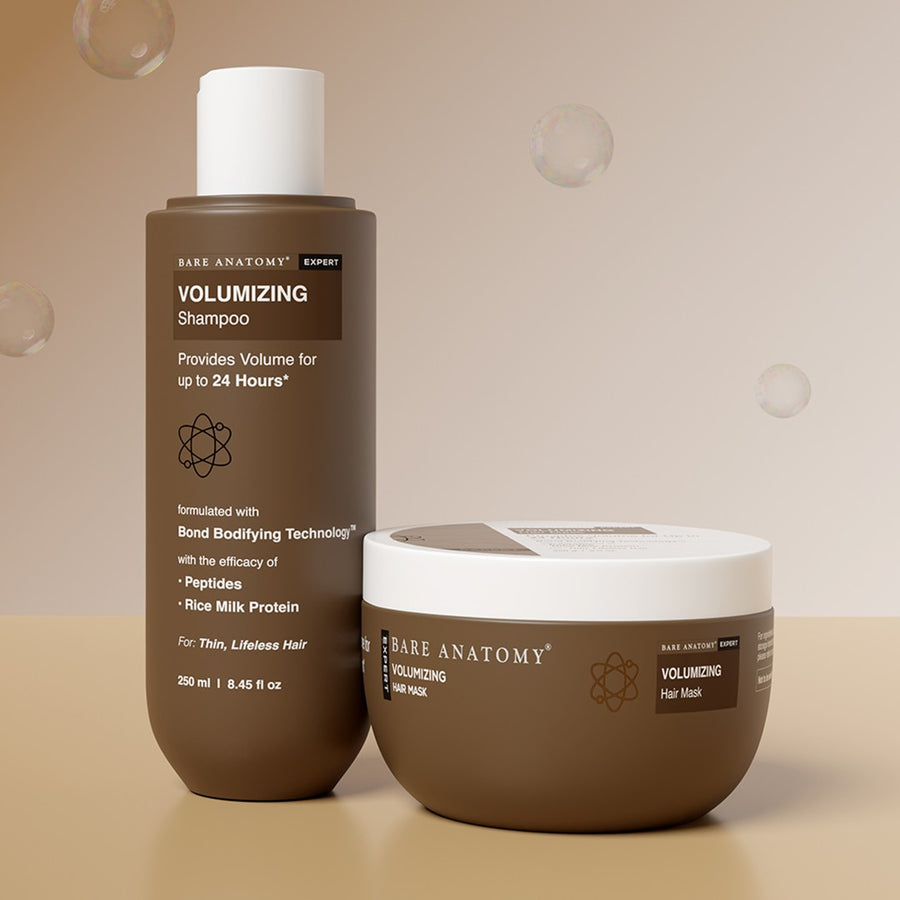
The Bare Anatomy Volumizing Shampoo with Rice Milk Protein and Peptides is designed to add volume while providing hydration. Infused with Rice Milk Protein and Coconut Milk Protein, it helps improve hair texture and leaves thin-looking hair appearing fuller.
3. Gentle Cleansing Agents
A shampoo should effectively remove sweat, excess oil, dirt, and product buildup without unnecessarily stripping the hair. If your hair is fragile or prone to breakage, a gentle formula can be especially useful.
4. Ingredients That Support Hair Strength
If your hair looks thin because of breakage, choose a formula that supports smoother and stronger-looking strands. Reducing breakage can help your hair maintain its existing length and fullness.
5. A Formula Suitable for Your Scalp
Your scalp condition also matters. If you have an oily scalp, you may need to cleanse more frequently, while dry or textured hair may require less frequent washing. The American Academy of Dermatology recommends adjusting shampoo frequency according to your hair and scalp type.
How Does a Volumizing Shampoo for Thin Hair Work?
A volumizing shampoo for thin hair is designed primarily to improve the appearance and feel of hair rather than increase the number of hair follicles.
These formulas can:
-
Remove excess oil that makes hair look flat
-
Clean away product buildup
-
Help strands feel lighter
-
Give hair a fuller-looking appearance
-
Improve manageability before styling
Some volumizing shampoos use proteins or similar film-forming ingredients that can coat the hair shaft and make individual strands appear fuller.
Shampoo for Thin and Fine Hair: What Should You Choose?
If you are searching for shampoo for thin and fine hair, the most important thing to remember is that fine texture and low density are different concerns.
For both concerns, a lightweight shampoo can be a practical starting point. A volumizing formula may help fine strands appear fuller, while gentle cleansing can prevent excess oil and buildup from making the hair look flatter.
Your conditioner also matters. For fine or straight hair, dermatologists recommend applying conditioner mainly to the ends rather than heavily coating the scalp and roots.
How to Use Shampoo for Thin Hair Correctly
Even a suitable shampoo may not give the desired results if it is used incorrectly.
Follow these steps:
-
Wet your hair thoroughly before applying shampoo.
-
Apply shampoo mainly to the scalp, where oil, sweat, and buildup accumulate.
-
Massage gently with your fingertips rather than scratching the scalp.
-
Let the shampoo rinse through the lengths instead of aggressively rubbing the hair.
-
Rinse thoroughly to remove product residue.
-
Apply conditioner to the lengths and ends if your hair needs additional moisture.
Mistakes to Avoid When Washing Thin Hair
Certain hair-care habits can make thin or fine hair appear flatter or contribute to breakage.
Using Too Much Shampoo
More shampoo does not necessarily mean cleaner hair. Use enough to cleanse your scalp effectively and rinse it thoroughly.
Applying Heavy Products at the Roots
Heavy conditioners, oils, and styling products can make fine hair look weighed down. Keep richer products primarily on the lengths and ends when needed.
Roughly Rubbing Wet Hair
Wet hair is more fragile and can break more easily with rough handling. Gently squeeze out excess water and avoid vigorous towel rubbing.
Using Excessive Heat
Frequent exposure to high heat from blow dryers, straighteners, and curling irons can damage the hair shaft. Using lower heat and limiting unnecessary heat styling can help reduce damage.
Frequently Ask Questions




Most Read Blogs

Exfoliating Peeling Solution: How to Use It Safely at Home
Adding an exfoliating peeling solution to a skincare routine can help improve the appearance of dullness, uneven texture, and clogged pores. However, because the peeling solutions contain exfoliating acids, using them too...


Best Shampoo for Thin Hair in India: How To Choose The Right One
Thin-looking hair can appear flat, limp, or less voluminous than you would like. The right shampoo can help remove excess oil and buildup while keeping the strands lightweight and easier to style....

How to Repair Hair After Coloring or Heat Styling
Hair coloring and heat styling can make your hair look polished and beautiful, but repeated exposure to bleach, dyes, straighteners, curling irons, and blow dryers can weaken the hair shaft. Over time,...

Signs of Damaged Hair and How to Fix Them
Healthy hair is usually smooth, manageable, and resilient. When hair is repeatedly exposed to heat, chemical treatments, friction, or environmental stress, the hair shaft can become weaker and more difficult to manage....

Leave-In Conditioner vs. Serum for Frizz Control: Which One Should You Choose?
Frizzy hair can look dry, rough, and difficult to manage. Both leave-in conditioners and hair serums can help manage frizz, but they work in different ways. A leave-in conditioner mainly adds moisture...

Retinol Purging: Is It Normal? What You Need To Know
Starting retinol may help improve uneven skin tone, fine lines, and overall skin texture. Retinoids are also used to treat acne. However, some people notice more pimples or clogged pores soon after...


