






Oily Skin but Dehydrated? Causes, Signs & Best Treatment
Does your skin look oily and greasy but still feel tight, flaky, or dry at the same time?
If yes, you may be dealing with dehydrated oily skin a common skin condition where the skin lacks water but continues to produce excess oil.
Many people assume oily skin cannot become dehydrated, but that is not true. In fact, when the skin loses hydration, it may start producing more oil to compensate for the moisture imbalance. This can leave your face looking shiny on the surface while feeling dry and uncomfortable underneath.
Understanding the difference between oily skin and dehydrated skin is the first step toward building the right skincare routine for balanced and healthy-looking skin.
What is Oily Skin?
Oily skin is a common skin type that is characterized by the excessive production of sebum, commonly known as natural oil from sebaceous glands, which results in a shiny and greasy appearance. Oily skin is commonly caused by hormonal changes, weather, and even sometimes genetics.
What is Dehydrated Skin?
Dehydrated skin is a temporary condition that is caused by a lack of water in the upper layer of the skin, rather than a lack of oil. It looks like dull and non-moisturized skin, often showing increased sensitivity around the skin.
Can Oily Skin Be Dehydrated?
Yes, oily skin can absolutely become dehydrated.
When the skin barrier becomes damaged due to harsh cleansers, over-exfoliation, hot water, or environmental stress, the skin loses water more quickly. In response, the sebaceous glands may produce more oil to protect the skin.
This creates a cycle where the skin feels oily and dry at the same time.
Common Signs of Dehydrated Oily Skin
You may have dehydrated oily skin if you notice:
- Excess oil in the T-zone
- Tightness after washing the face
- Flaky patches despite oily skin
- Dull or tired-looking skin
- Breakouts and clogged pores
- Makeup appearing patchy or cakey
- Increased skin sensitivity
What Causes Dehydrated Oily Skin?
Overwashing the Skin
Cleansing too frequently or using harsh face washes may weaken the skin barrier and increase moisture loss.
Skipping Moisturizer
Many people with oily skin avoid moisturizer, but this can worsen dehydration and trigger excess oil production.
Harsh Skincare Products
Products containing high alcohol content, strong fragrance, or harsh exfoliants may irritate the skin barrier.
Hot Water Exposure
Frequent hot showers or washing the face with hot water may strip away natural moisture from the skin.
Low Water Intake
Not drinking enough water may contribute to overall dehydration, which can affect skin hydration levels.
| Oily Skin | Dehydrated Skin |
|---|---|
| Skin type | Temporary condition |
| Produces excess oil | Lacks water |
| Appears greasy | Feels tight or dull |
| Enlarged pores common | Fine dehydration lines common |
| May feel heavy | May feel rough or sensitive |
How to treat dehydrated oily skin?
Treating this condition involves proper hydration, using the right skincare routine, and focusing on rebuilding the barrier and maintaining the balance. Here is a step-by-step guide
Build a suitable skincare regimen.
Step 1: Cleanse
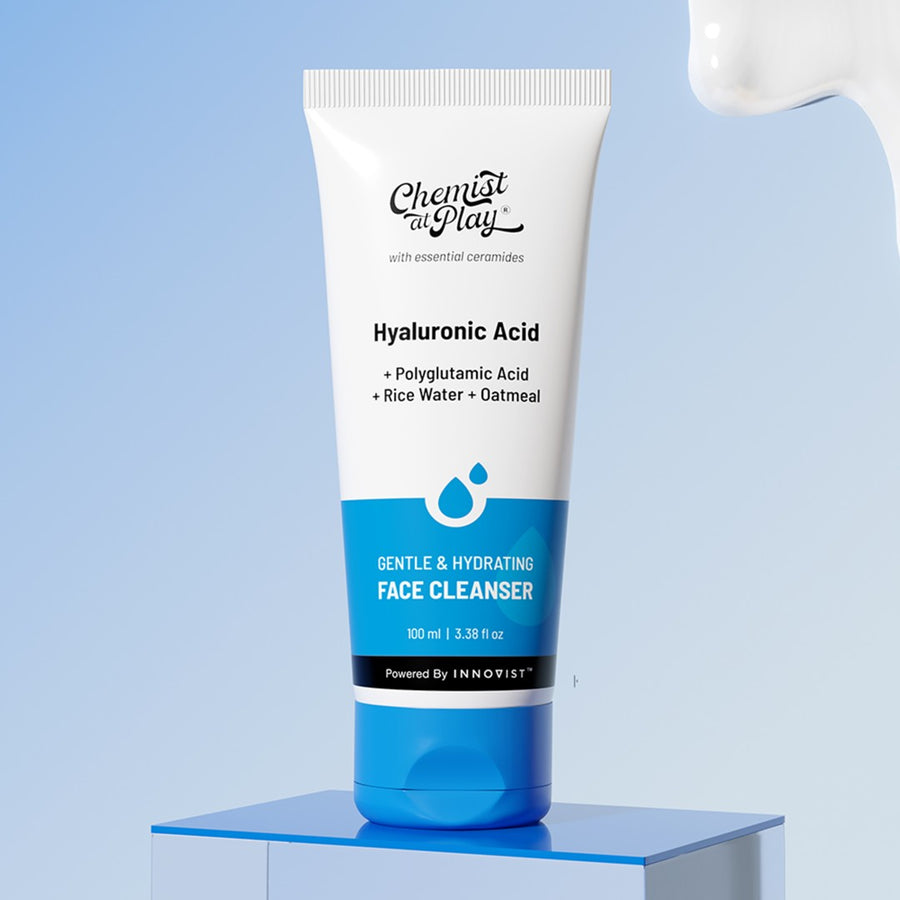
Start with a mild face wash, such as a hydrating face wash or a gel-based cleanser. The Chemist At Play Hydrating Face Cleanser helps cleanse the skin gently while supporting hydration.
Step 2: Use a hydrating serum
After you wash your face, apply a light-weight serum such as Hyaluronic Acid Serum. This penetrates deeper to deliver intense hydration.
Step 3: Moisturizer
Include an oil-free moisturizer to lock in the hydration.
Step 4: Do not forget sunscreen
Finish your skincare with the right SPF, which protects against UV Damage that can worsen dehydration.
Best Ingredients for Dehydrated Oily Skin
Hyaluronic Acid
Helps attract and retain water in the skin without clogging pores.
Niacinamide
May help balance oil production while supporting the skin barrier.
Ceramides
Help strengthen the skin barrier and reduce moisture loss.
Glycerin
A humectant that helps draw moisture into the skin.
Skincare Mistakes That Make Oily Skin More Dehydrated
- Overwashing the face
- Using alcohol-heavy toners
- Skipping moisturizer
- Over-exfoliating
- Using very hot water
- Not wearing sunscreen
Final Thoughts
Dehydrated oily skin can feel confusing because the skin appears greasy while still feeling dry, tight, or uncomfortable underneath.
The key to treating oily but dehydrated skin is restoring hydration instead of stripping away oil aggressively.
Using gentle cleansers, lightweight hydrating products, oil-free moisturizers, and barrier-supporting ingredients can help maintain balanced, healthy-looking skin over time.

Shop the story


Fenugreek Seeds for Hair Growth & Hair Fall: Benefits, How to Use & Results
Did you know Fenugreek seeds play a vital role in regrowing your hair while preventing hair fall? If not, then you are probably not the only one who was unaware of this fact. Made with the goodness of fenugreek extract, this formula helps strengthen weak roots and prevent unwanted hair...


UV Index Explained: How to Measure Your Daily Sun Risk & Protect Your Skin
When we step out in the sun, most of us only think about temperature or brightness. But the real factor that determines how harmful the sun can be for your skin is the UV Index. Understanding the UV Index helps you know how strong the sun’s ultraviolet radiation is on...


Regrow Your Hair: Top 10 Tips to Regrow Your Hair Naturally
Hair fall, thinning, and slow growth are some of the most searched hair concerns in India. If you’ve been typing “how to regrow hair naturally” or “best way to grow hair faster” into Google lately, you’re not alone. The good news? In many cases, hair regrowth is possible with the...

Guide to the Best Sunscreen for Kids in India
For parents, protecting their child’s delicate skin is a daily concern, and sun safety is at the heart of it. Whether at the playground, swimming pool, or simply walking to school, a child’s exposure to UV rays can lead to sunburn, rashes, and long-term skin problems. You might wonder: What’s...


