






Fine Hair vs Thin Hair: What's the Difference?
Fine hair and thin hair are often used interchangeably, but they describe two different aspects of your hair. Fine hair refers to the diameter of each individual strand, while thin hair usually refers to the amount or density of hair on the scalp.
Understanding the fine hair vs thin hair difference can help you identify your hair type and choose a routine that suits your needs. While fine hair can have plenty of strands, thin hair may have fewer strands across the scalp. It is also possible to have both fine and thin hair.
What Is Fine Hair?
Fine hair refers to hair strands that have a smaller diameter than medium or coarse strands. The term describes the thickness of an individual hair strand rather than how much hair you have overall.
Fine hair can be straight, wavy, curly, or coily. Since the strands are smaller, they may be more delicate and can become weighed down by heavy hair products.
Fine Hair Characteristics
Common fine hair characteristics include:
-
Individual strands have a smaller diameter and may feel more delicate.
-
Hair can become flat or limp easily.
-
Heavy oils and styling products may weigh it down.
-
Fine strands may be more prone to breakage from excessive heat or rough handling.
-
Hair can look smooth but may lack volume.
-
Fine strands may make the hair appear less voluminous, especially when styled flat
Having fine hair does not automatically mean you have low hair density. You can have many fine strands covering the scalp.
What Is Thin Hair?
Thin hair generally refers to hair with lower density, meaning there are fewer strands growing across a given area of the scalp. It describes how much hair you have, rather than the diameter of each strand.
Someone can have thin hair with medium or coarse individual strands. Hair density can also naturally vary from one person to another.
Thin Hair Characteristics
Some common thin hair characteristics include:
-
The scalp may be more visible, particularly around the parting.
-
The hair may appear less full overall.
-
Ponytails may look or feel less full when hair density decreases.
-
Hair may look sparse in certain areas.
-
Hairstyles may have less natural volume or coverage.
-
A noticeable reduction in density can sometimes occur with excessive shedding or other underlying causes.
If you notice sudden or significant changes in hair density, it is worth discussing them with a dermatologist rather than assuming they are simply your natural hair type.
Fine Hair vs Thin Hair: The Key Difference
|
Feature |
Fine Hair |
Thin Hair |
|
What it describes |
Individual strand diameter |
Hair density on the scalp |
|
Main concern |
Strand thickness |
Amount of hair |
|
Can it have high density? |
Yes |
Generally refers to lower density |
|
Can it have thick individual strands? |
No, fine hair has a smaller strand diameter. |
Yes |
|
Can it occur together? |
Yes |
Yes |
Fine vs Thin Hair Difference in Hair Care
The fine vs thin hair difference also affects how you approach your hair routine.
Fine strands often benefit from lightweight products that provide conditioning without creating excessive weight. Hair with lower density may benefit from lightweight products that help maintain manageability without making the roots appear flat. The right routine should also consider your scalp condition, hair texture, porosity, chemical treatments, and styling habits.
Fine Hair Care Tips
If you have fine strands, these fine hair care tips can help you maintain a lightweight and manageable routine.
Choose Lightweight Hair Products
Look for lightweight shampoos, conditioners, and styling products that suit your hair's needs. Rich formulas are not necessarily bad for fine hair, but using too much product can make the strands feel heavy.
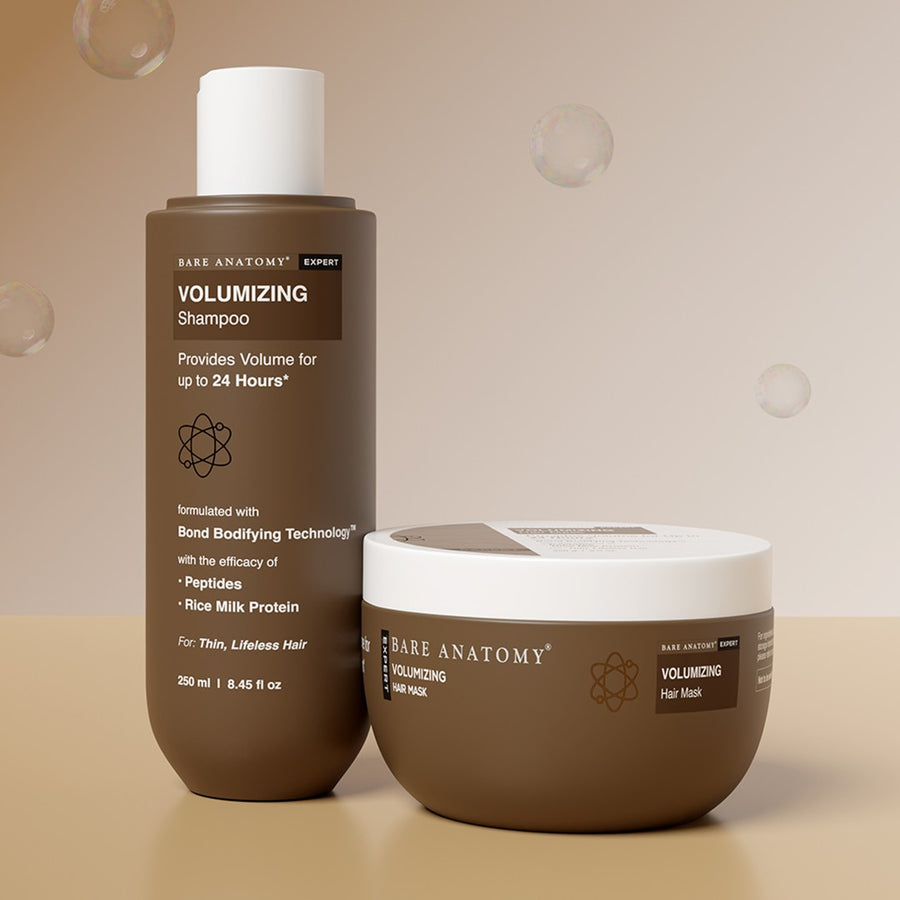
The Bare Anatomy Volumizing Shampoo with Rice Milk Protein & Peptides offers visible bounce to the hair while keeping the hair hydrated for longer periods of time. Formulated to add visible fullness to the hair, it improves the hair texture and leaves thin, flat, and fine-looking hair.
Apply Conditioner Mainly to the Lengths
Apply conditioner from the mid-lengths to the ends instead of concentrating it heavily at the roots. This can help condition the hair without unnecessarily weighing down the scalp area.
Avoid Excessive Heat Styling
Frequent use of high heat can weaken the hair shaft and contribute to dryness and breakage. Use heat-protectant products and keep styling temperatures appropriate for your hair.
Be Gentle When Detangling
Fine strands can be delicate, so avoid aggressive brushing or pulling. Detangle gently, starting from the ends and gradually moving upward.
Avoid Product Buildup
Using too many styling products can leave fine hair feeling heavy or coated. Keep your routine simple and cleanse your scalp regularly according to your hair and scalp needs.
Focus on Scalp Care
Healthy-looking hair starts with a well-maintained scalp. Keep your scalp clean and pay attention to persistent itching, irritation, excessive oiliness, or unusual shedding.
Hair Care Tips for Thin Hair
If your concern is lower hair density rather than strand diameter, focus on maintaining scalp and hair health.
-
Use gentle hair-care products suited to your scalp.
-
Avoid tight hairstyles that repeatedly pull on the hair.
-
Minimise unnecessary heat and chemical processing.
-
Handle wet hair gently because it can be more prone to stretching and breakage.
-
Maintain a balanced diet that provides adequate protein and essential nutrients.
-
Monitor sudden or progressive changes in hair density.
-
Consult a dermatologist if you experience persistent shedding or noticeable thinning.
When Should You See a Dermatologist?
Natural fine hair or naturally lower hair density does not necessarily require medical treatment. However, changes in your hair can sometimes indicate an underlying issue.
Consider consulting a dermatologist if you notice:
-
Sudden or significant hair shedding
-
Rapidly decreasing hair density
-
Widening of the hair part
-
Visible bald patches
-
Persistent scalp irritation or inflammation
-
Hair loss that continues or worsens over time
A dermatologist can assess your scalp and hair and determine whether further evaluation or treatment is appropriate.
Frequently Ask Questions




Most Read Blogs

Men's Body Care: A Simple, Effective Routine
Men’s body care is a topic that has been neglected for many decades but has started to gain attention, thanks to the increasing awareness and need for skin and body care for...


Can Too Much Oiling Cause Hair Fall? What Experts Say
Hair oiling can help reduce dryness and make hair feel softer, but using too much oil or applying it too frequently may not suit every scalp. If you are wondering whether too...

Habits That Make Hair Look Flat: Common Mistakes & How to Add Volume
Flat, limp hair can make your hairstyle look less full, even when your hair is healthy. Sometimes, the problem is not your hair type but everyday habits that affect how your scalp...

Fine Hair vs Thin Hair: What's the Difference?
Fine hair and thin hair are often used interchangeably, but they describe two different aspects of your hair. Fine hair refers to the diameter of each individual strand, while thin hair usually...

Tea Tree Oil for Scalp: Does It Help?
Tea tree oil is a popular essential oil often used in hair and scalp care, especially for concerns such as dandruff, itchiness, and excess oil. Its antimicrobial properties have made it a...

Rice Protein for Hair: Benefits for Volume and Strength
Healthy-looking hair is not only about length. Hair that feels stronger, looks fuller, and is easier to manage can make a noticeable difference to your overall appearance. If your hair feels weak,...


