






Tea Tree Oil for Scalp: Does It Help?
Tea tree oil is a popular essential oil often used in hair and scalp care, especially for concerns such as dandruff, itchiness, and excess oil. Its antimicrobial properties have made it a common ingredient in scalp-care products.
But does tea tree oil actually help the scalp, and how should you use it safely? In this guide, we explain the potential tea tree oil scalp benefits, what research suggests, and whether it can help with dandruff and an itchy scalp.
What Is Tea Tree Oil?
Tea tree oil is an essential oil extracted from the leaves of the Melaleuca alternifolia plant, which is native to Australia. It contains naturally occurring compounds such as terpinen-4-ol, which contributes to its antimicrobial activity. Because essential oils are highly concentrated, tea tree oil should not usually be applied directly to the scalp. It is generally used in diluted formulations or hair-care products designed for scalp application.
Tea Tree Oil for Scalp: Does It Help?
Tea tree oil for scalp may help support scalp hygiene and manage certain common scalp concerns. Its antimicrobial properties may be useful when microorganisms contribute to scalp issues such as dandruff.
However, tea tree oil is not a universal treatment for every scalp problem. Dandruff, scalp irritation, dryness, psoriasis, and fungal infections can have different causes and may require different treatments. If you have persistent itching, redness, painful spots, thick scaling, or hair loss, it is better to consult a dermatologist rather than relying only on tea tree oil.
Tea Tree Oil Scalp Benefits
The potential benefits of tea tree oil for the scalp mainly relate to its antimicrobial and cleansing properties.
1. May Help Manage Dandruff
Dandruff is associated with the activity and abundance of Malassezia yeast on the scalp. Tea tree oil has antimicrobial properties, which may make it useful as part of a dandruff-care routine.
2. May Help With an Itchy Scalp
An itchy scalp can occur because of dandruff, dryness, product buildup, irritation, or other scalp conditions. By addressing factors associated with dandruff, tea tree oil may help relieve itchiness related to dandruff
However, tea tree oil for itchy scalp is not appropriate for every cause of itching. Applying concentrated tea tree oil to an already irritated scalp may make the discomfort worse.
3. Supports Scalp Cleanliness
Tea tree oil has antimicrobial properties that may help maintain a cleaner scalp environment. This can be particularly useful in products formulated for people who experience excess oil or buildup. It should not, however, be considered a substitute for regular scalp cleansing.
4. May Help Reduce Scalp Buildup
When oil, dead skin cells, sweat, and styling products accumulate on the scalp, the hair can feel greasy or weighed down. A properly formulated scalp-care product containing tea tree oil may help support cleansing.
How to Use Tea Tree Oil on the Scalp
If you want to include tea tree oil in your scalp-care routine, choose a properly formulated product rather than applying undiluted essential oil directly to your skin.
Option 1: Use a Tea Tree Oil Shampoo
A shampoo containing tea tree oil is one of the simplest ways to incorporate it into your routine. Follow the product instructions and avoid leaving it on longer than recommended.
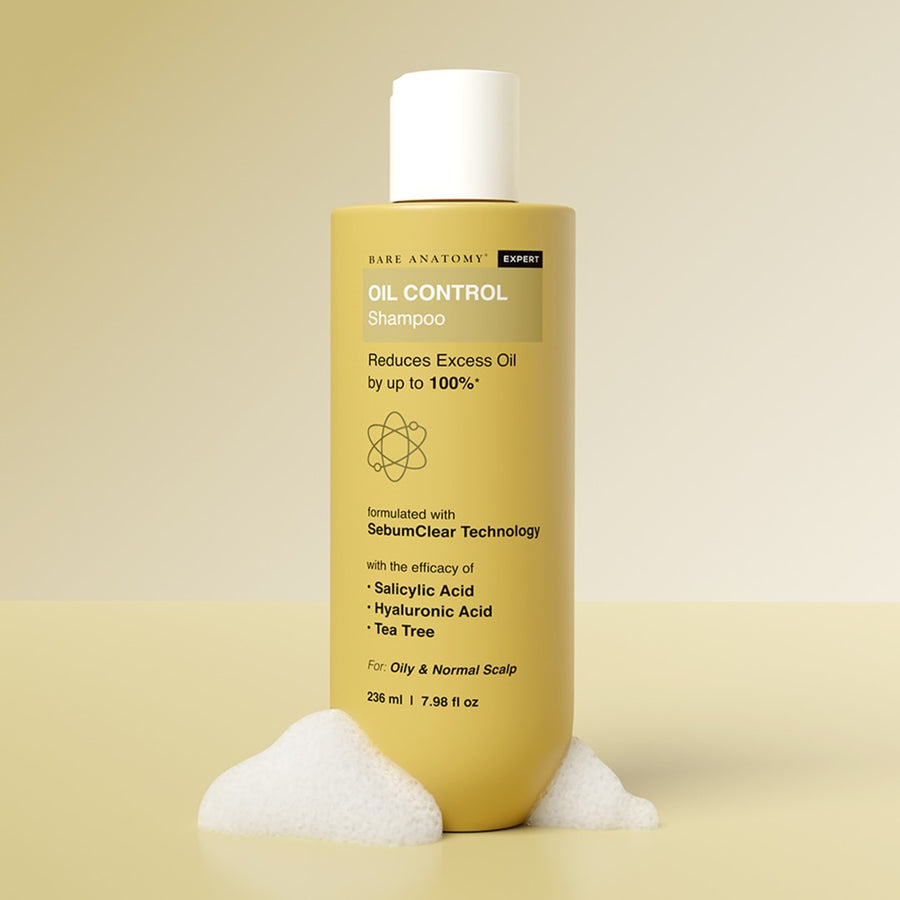
The Bare Anatomy Oil Control Shampoo with Salicylic Acid, Hyaluronic Acid, and Tea Tree reduces excessive oil by up to 100%. The Salicylic acid found in this shampoo helps reduce dandruff and keeps unwanted visible flakes away.
Option 2: Use a Diluted Formulation
If using tea tree essential oil, it should be appropriately diluted in a suitable carrier or cosmetic formulation. Never apply concentrated tea tree oil directly to your scalp.
Option 3: Patch Test Before Use
Apply a small amount of the diluted or formulated product to a small area of skin first. Stop using it if you experience burning, redness, swelling, or significant irritation.
How Often Can You Use Tea Tree Oil on the Scalp?
The ideal frequency depends on the concentration and type of product you are using. A tea tree oil shampoo can generally be used according to its label instructions. There is no need to use tea tree essential oil more frequently in an attempt to get faster results.
If your scalp becomes dry, irritated, or uncomfortable after using a tea tree oil product, reduce use or discontinue it.
Who Should Avoid Tea Tree Oil?
Tea tree oil may not be suitable for everyone. Take extra care if you:
-
Have very sensitive or irritated skin
-
Have open cuts or scratches on the scalp
-
Have a known allergy to tea tree oil
-
Experience burning or redness after using essential oils
-
Are using other scalp treatments that may cause irritation
Never swallow tea tree oil. It is intended for external use only.
Tea Tree Oil for Scalp: Safety Tips
Keep these precautions in mind when using tea tree oil:
-
Never use undiluted tea tree essential oil directly on the scalp.
-
Perform a patch test before using a new product.
-
Avoid contact with the eyes.
-
Do not use it on broken or severely irritated skin.
-
Stop using the product if you develop burning, swelling, or a rash.
-
Keep tea tree oil products away from children and pets.
-
For persistent scalp problems, seek advice from a dermatologist.
Frequently Ask Questions


Most Read Blogs

Men's Body Care: A Simple, Effective Routine
Men’s body care is a topic that has been neglected for many decades but has started to gain attention, thanks to the increasing awareness and need for skin and body care for...


Can Too Much Oiling Cause Hair Fall? What Experts Say
Hair oiling can help reduce dryness and make hair feel softer, but using too much oil or applying it too frequently may not suit every scalp. If you are wondering whether too...

Habits That Make Hair Look Flat: Common Mistakes & How to Add Volume
Flat, limp hair can make your hairstyle look less full, even when your hair is healthy. Sometimes, the problem is not your hair type but everyday habits that affect how your scalp...

Fine Hair vs Thin Hair: What's the Difference?
Fine hair and thin hair are often used interchangeably, but they describe two different aspects of your hair. Fine hair refers to the diameter of each individual strand, while thin hair usually...

Tea Tree Oil for Scalp: Does It Help?
Tea tree oil is a popular essential oil often used in hair and scalp care, especially for concerns such as dandruff, itchiness, and excess oil. Its antimicrobial properties have made it a...

Rice Protein for Hair: Benefits for Volume and Strength
Healthy-looking hair is not only about length. Hair that feels stronger, looks fuller, and is easier to manage can make a noticeable difference to your overall appearance. If your hair feels weak,...


