






Why Is My Scalp Oily but My Ends Dry? Causes & Solution
Having an oily scalp and dry hair ends at the same time can be confusing. Your roots may look greasy soon after washing, while the lengths and ends feel rough, frizzy, or brittle. This combination is often caused by differences in how oil moves along the hair shaft, along with hair type, washing habits, heat styling, and chemical treatments.
If you are dealing with an oily scalp and dry ends concern, the solution is not necessarily to wash your entire hair more often. Instead, your scalp and hair lengths may need different care.
Why Is My Scalp Oily but Hair Dry?
The scalp naturally produces sebum, an oily substance that helps protect the skin and hair. However, this oil does not always spread evenly from the roots to the ends, especially when the hair is long, curly, coarse, or damaged.
As a result, you can have oily roots and dry ends at the same time. Frequent shampooing, hot water, heat styling, colouring, and harsh hair products can also make the lengths and ends feel drier.
Understanding the cause can help you choose the right oily scalp dry hair solution without making either concern worse.
What Causes an Oily Scalp and Dry Hair Ends?
Several factors can contribute to an oily scalp and dry hair ends.
1. Natural Sebum Production
Your scalp produces sebum naturally, and some people have a naturally oilier scalp than others. The oil is produced near the roots, while the ends are the oldest part of the hair and may receive less natural lubrication.
2. Frequent Hair Washing
Washing your hair too frequently may remove natural oils from the hair lengths. If you use a strong cleansing shampoo repeatedly, your ends may become dry, rough, or more prone to frizz. However, this does not mean you should avoid washing an oily scalp. Instead, choose a cleansing routine that keeps the scalp clean without unnecessarily drying the lengths.
3. Heat Styling
Regular use of straighteners, curling irons, and blow dryers can contribute to dryness and breakage, particularly at the ends. If you frequently style your hair with heat, your scalp can remain oily while the hair lengths become increasingly dry.
4. Hair Colouring and Chemical Treatments
Hair colouring, bleaching, straightening, and other chemical treatments can affect the hair cuticle. Over time, treated hair may become more porous, rough, and prone to moisture loss.
5. Hair Type and Texture
The natural shape of your hair can affect how easily scalp oils travel down the strands. Straight hair may allow oil to move more easily toward the lengths, while curly or tightly textured hair can make this more difficult.
Therefore, someone can have an oily scalp while still experiencing dry-looking ends.
How to Treat Oily Scalp and Dry Ends
The best approach to treating an oily scalp and dry ends is to care for the scalp and lengths separately.
1. Choose a Shampoo Based on Your Scalp
Apply shampoo mainly to your scalp and roots rather than aggressively rubbing it through the ends. A shampoo suitable for oily scalps can help remove excess oil, sweat, and buildup. Let the lather rinse through the lengths instead of repeatedly scrubbing the ends.
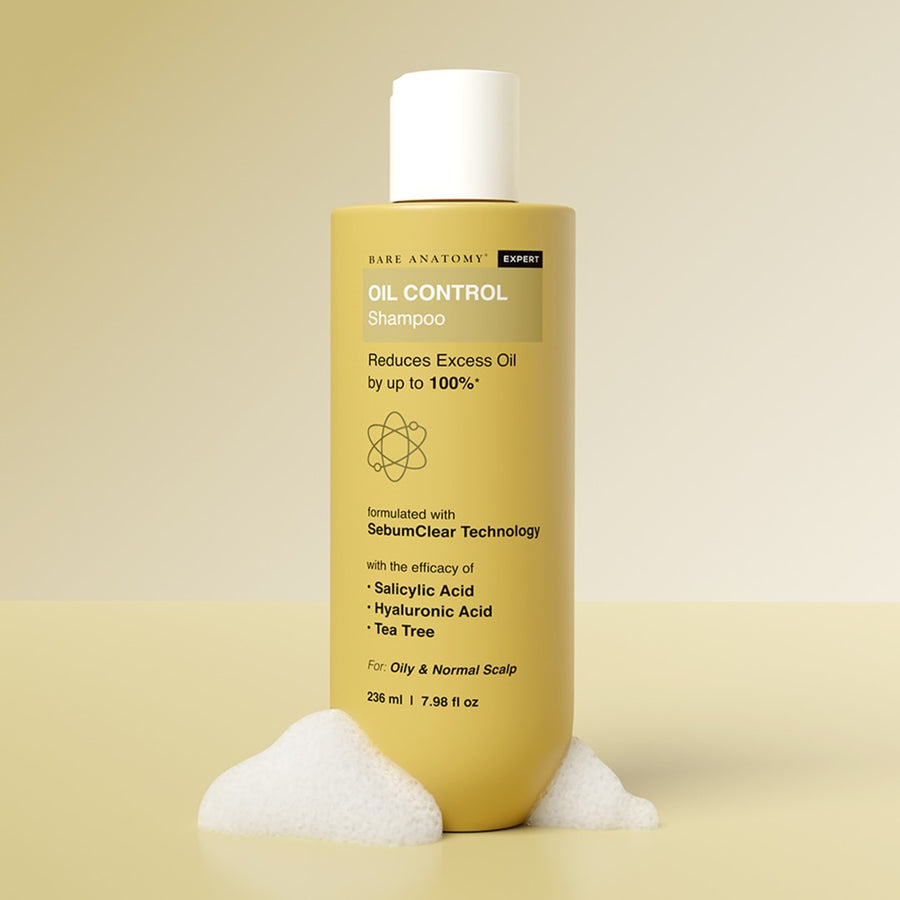
The Bare Anatomy Oil Control Shampoo with Salicylic Acid, Hyaluronic Acid, and Tea Tree is the right option for your oily scalp. Formulated to control excessive sebum from the scalp, it keeps the scalp clean without stripping the natural moisture
2. Condition the Mid-Lengths and Ends
Conditioner is especially useful when you have oily roots dry ends. Apply it from the mid-lengths toward the ends, avoiding the scalp if your roots become greasy easily. This helps provide conditioning where your hair needs it most without unnecessarily weighing down the roots.
3. Avoid Very Hot Water
Hot water can leave the hair feeling dry and uncomfortable, particularly when combined with frequent washing. Use lukewarm water when washing your hair and rinse thoroughly.
4. Reduce Excessive Heat Styling
Try to limit frequent use of straighteners, curling irons, and high-heat blow-drying. When heat styling is necessary, use an appropriate heat-protecting product and avoid repeatedly applying high heat to the same sections.
5. Use a Hair Mask on Dry Ends
If your ends feel rough or brittle, a nourishing hair mask can provide additional conditioning.
Oily Scalp Dry Hair Solution: A Simple Hair Care Routine
If you are looking for an oily scalp dry hair solution, try keeping your routine simple and targeted.
Step 1: Cleanse the scalp
Use a shampoo suited to your scalp's oiliness and massage it gently into the scalp.
Step 2: Rinse thoroughly
Make sure no shampoo remains around the scalp or hairline.
Step 3: Condition the lengths
Apply conditioner from the mid-lengths to the ends, focusing on areas that feel dry.
Step 4: Protect the ends
Use a lightweight leave-in conditioner or serum on the lengths and ends if your hair needs additional smoothness.
Step 5: Minimise heat damage
Reduce unnecessary heat styling and use heat protection when styling.
Step 6: Trim damaged ends
If the ends are severely split or damaged, trimming them can help prevent splits from travelling farther up the hair shaft.
What to Avoid When You Have Oily Roots and Dry Hair
When dealing with oily roots and dry hair, avoid treating both concerns in exactly the same way.
-
Do not apply heavy oils directly to an oily scalp unless they suit your scalp and routine.
-
Do not scrub your scalp aggressively.
-
Do not use very hot water regularly.
-
Do not apply strong cleansing products repeatedly to dry ends.
-
Do not use excessive heat on already damaged hair.
-
Do not skip conditioner completely just because your scalp is oily.
-
Avoid applying heavy conditioners and masks directly to the scalp if they make your roots greasy.
Frequently Ask Questions


Most Read Blogs

Ceramides for Skin: Benefits, Types, Uses and How They Support the Skin Barrier
Ceramides are naturally occurring lipids found in high concentrations in the outermost layer of the skin, particularly the stratum corneum. They are an important part of the skin barrier, working alongside cholesterol and...


Men's Body Care: A Simple, Effective Routine
Men’s body care is a topic that has been neglected for many decades but has started to gain attention, thanks to the increasing awareness and need for skin and body care for...

Can Too Much Oiling Cause Hair Fall? What Experts Say
Hair oiling can help reduce dryness and make hair feel softer, but using too much oil or applying it too frequently may not suit every scalp. If you are wondering whether too...

Habits That Make Hair Look Flat: Common Mistakes & How to Add Volume
Flat, limp hair can make your hairstyle look less full, even when your hair is healthy. Sometimes, the problem is not your hair type but everyday habits that affect how your scalp...

Fine Hair vs Thin Hair: What's the Difference?
Fine hair and thin hair are often used interchangeably, but they describe two different aspects of your hair. Fine hair refers to the diameter of each individual strand, while thin hair usually...

Tea Tree Oil for Scalp: Does It Help?
Tea tree oil is a popular essential oil often used in hair and scalp care, especially for concerns such as dandruff, itchiness, and excess oil. Its antimicrobial properties have made it a...


